
If you use Solana regularly, chances are you need a blockchain explorer that’s fast, reliable, and straightforward. I rely on explorer tools a lot—when a tx looks weird or a token swap fails, the first thing I do is pull up transaction details. The Solscan interface makes that easy. It’s not perfect, but it’s useful, and you can get a lot of insight in a few clicks.
Solana’s speed can be both a blessing and a puzzle. Blocks come quickly. Transactions pile up. At a glance, you might think everything is fine, but digging into a single transaction often reveals the why: whether it was a timing issue, a program instruction misfire, or an out-of-gas style error from a dependent program. For clarity, check the solscan explorer official site—it’s where I start when I want raw, readable info on Solana transactions.
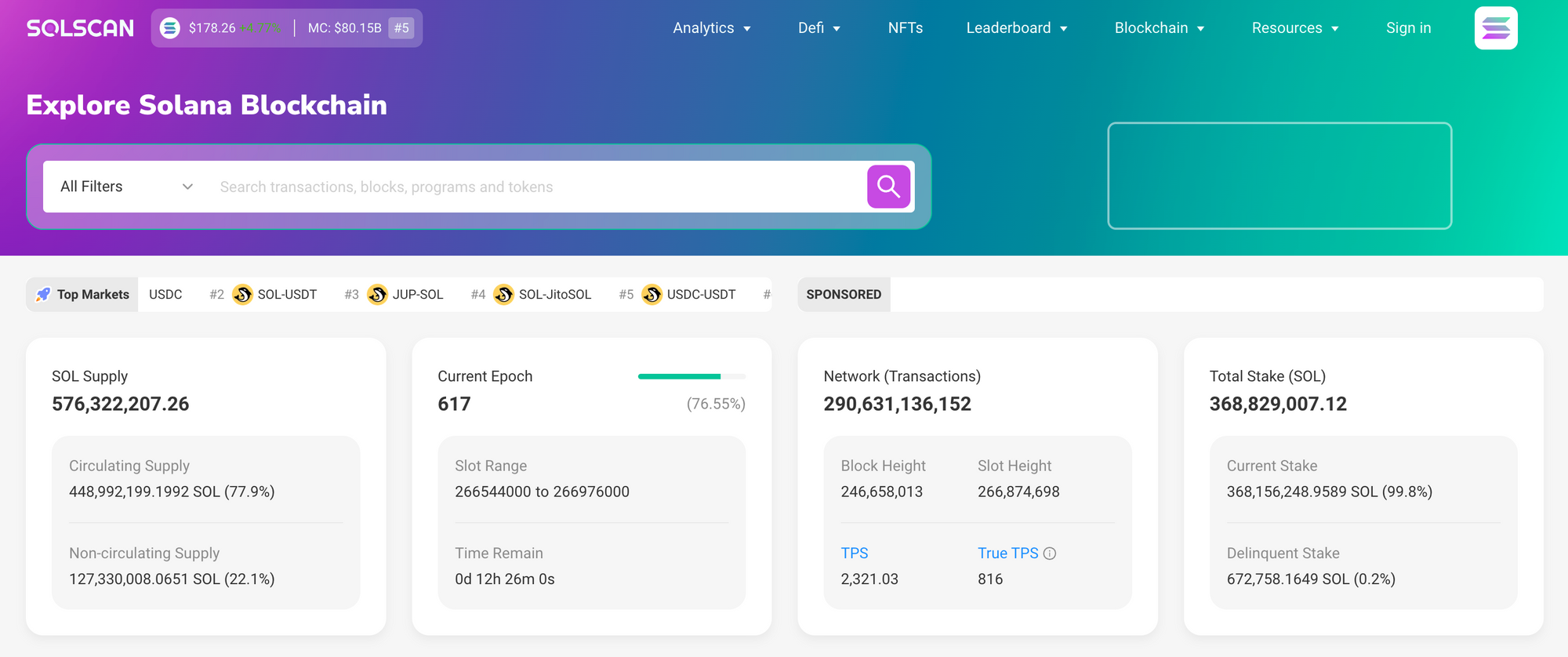
Quick guide: reading a Solana transaction on Solscan
Headlines first: every transaction page shows the same core elements — confirmation status, block time, involved accounts, instructions, and logs. Start with status. If it’s confirmed or finalized, you can trust the on-chain data. If it’s pending, wait—retries happen, but the explorer will update.
Next, scan the instruction list. Each instruction maps to a program (like the token program, Serum, or a custom program). Click the program address to see program-level analytics. The logs are gold. They often include program error strings or custom messages developers include for debugging.
Token transfers appear as separate logs and parsed events. When multiple token transfers happen in one transaction (common in swaps), Solscan groups them so you can follow the money flow instead of guessing which account got what. Pay attention to pre- and post-balances: they show exact lamport changes and can reveal rent-exempt account creations or unexpected fees.
Understanding fee behavior and retries
Solana fees are tiny compared to other chains, but they still matter for batched txs and for bots. If you see repeated failed transactions from one signer, check the fee-payer and recent blockhash cadence. A stale blockhash leads to rejections. Also, program-level limitations—budget, compute units—show up in logs. They’re not always obvious unless you look at the compute unit consumption.
I often look at the “Compute Units Consumed” field when troubleshooting batched orders or complex swaps. If consumption spikes near program limits, that’s a hint to simplify instructions or split work across transactions. Also, watch for transaction size—large payloads can push you into unexpected edge-cases.
Solana analytics on Solscan: beyond single transactions
Solscan isn’t just a transaction viewer. It offers wallet analytics, token pages, and program metrics. For token research, check holders, transfers over time, and liquidity pool links. For accounts, the explorer shows token balances broken down by mint and tracks historical inflows/outflows—handy when monitoring whale moves or suspicious airdrops.
Program analytics help when you’re auditing or following an on-chain project. Solscan surfaces program deployments, verified source links where available, and interaction summaries. That helps answer two common questions quickly: Who’s been calling this program? And has activity grown or faded over time?
Practical workflows I use
1) Failed swap troubleshooting: copy the tx signature, paste into Solscan, and inspect logs. If the log shows “Instruction error: Custom(1)” or similar, look up the program’s source or docs—often the error is documented. 2) Wallet hygiene: check token list and unusual mint interactions. If a wallet suddenly holds a token you didn’t expect, see the transfer history to identify the sender. 3) Liquidity checks: examine token pair transfer history and pool addresses to validate liquidity depth before interacting with a DEX.
When I need a quick snapshot of network health, I use Solscan’s charts for TPS and block times. They’re not a substitute for deeper node metrics, but they’re good for spotting recent anomalies—sudden TPS drops, block time spikes, or mempool congestion signs.
FAQs
How do I verify a transaction was successful?
Look for the “Finalized” status and absence of error messages in the logs. Check pre/post balances for expected changes and confirm token transfers. If everything lines up, the transaction completed as intended.
Can Solscan help me debug smart contract errors?
Yes, to an extent. Solscan surfaces program logs and instruction-level data. If the program emits descriptive error messages, you’ll see them. For deeper debugging you’ll need source code, local testnets, or direct developer tools, but Solscan provides the on-chain breadcrumbs.
Is Solscan safe to use for wallet lookups?
Solscan is a read-only explorer—using it to view public addresses and transactions doesn’t expose your keys. However, be cautious about any third-party links or downloadable content it might reference. Always keep private keys and seed phrases offline and never paste them into a website.